Making complex science easier to understand and use.
I enjoy turning complex scientific work into explanations that another person can see, question, and use. Across my research and EveryWater, this has meant interactive study pages, visual models, and English and Urdu product guidance.
I also want more students in Pakistan to experience science through familiar questions, simple experiments, and curiosity rather than memorization.
How I make science useful
The audience may change, but the goal is the same: make the mechanism, the practical choice, and the limits of the evidence clear.
Animated water-science explainers
Each model slows down a process that is normally difficult to see. Choose a topic, run the process, and follow what moves, what remains, and why the result matters.
- Outside the fibre: feed water.
- Hatched band: the membrane wall.
- Open channel between the bands: the lumen.
- Arrow leaving to the right: filtrate.
- Water enters from every side of the fibre.
- Membrane wall
- Larger particle, stays outside
- Microorganism, stays outside
- Dissolved substance, can pass
- Water
Why can a membrane stop bacteria but let dissolved contaminants pass?
A membrane is a physical barrier with very small openings. Water crosses the barrier. Larger particles and many microorganisms remain outside, while some dissolved substances are small enough to pass through. The result depends on the membrane material, pore-size distribution, pressure, integrity, and the contaminant itself.
Follow the blue water arrows. Compare the round particle and microbial markers that remain outside with the small diamond markers that enter the fibre.
Why it matters. This is why one filter does not solve every water problem. A membrane selected for microbes may not remove dissolved arsenic, fluoride, nitrate, or salinity.
- Blowdown
- Moderate
- Mineral concentration
- Moderate
Qualitative mechanism, not a dosing calculator.
Membrane filtration. Water crosses a barrier with very small openings. Larger particles and many microorganisms stay outside, while some dissolved substances are small enough to pass. Explore membrane-treatment comparisons.
Chlorination. Chlorine reacts with microorganisms and reduces infection risk. It also reacts with material already in the water and forms disinfection byproducts. Explore the chlorination study.
Cooling towers. Evaporation carries heat away and leaves dissolved minerals behind, so the circulating water grows more concentrated until blowdown removes part of it and make-up water replaces the loss. Explore the data-center cooling model.
The animations above need JavaScript. The mechanisms and the study pages behind them do not.
From technical knowledge to everyday action
At EveryWater, I helped translate how EveryClean should be installed, used, cleaned, and maintained into illustrated guidance in English and Urdu. The goal was practical: make the next action clear, reduce avoidable errors, and help users understand both what the filter could do and where its limits began.
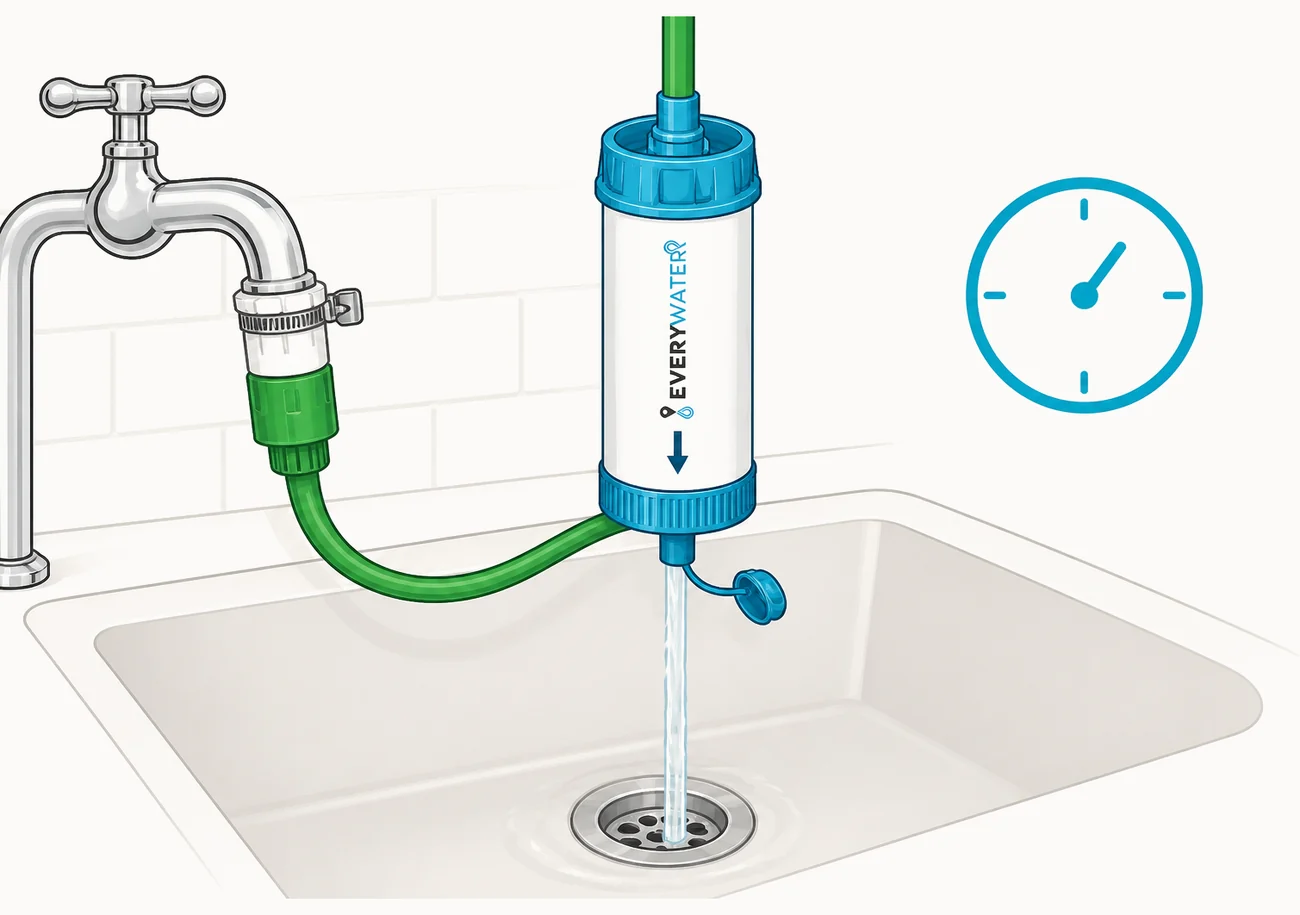
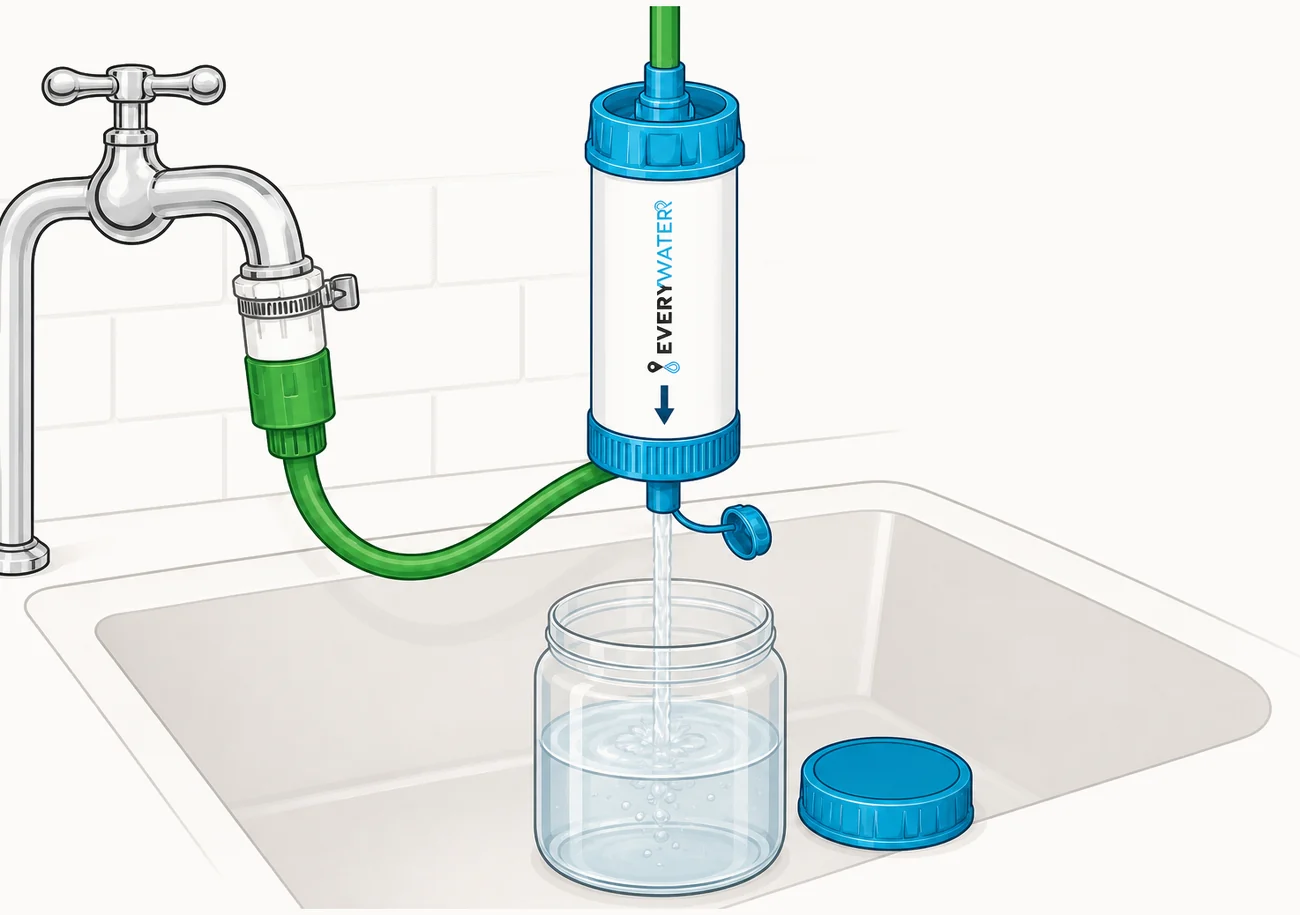
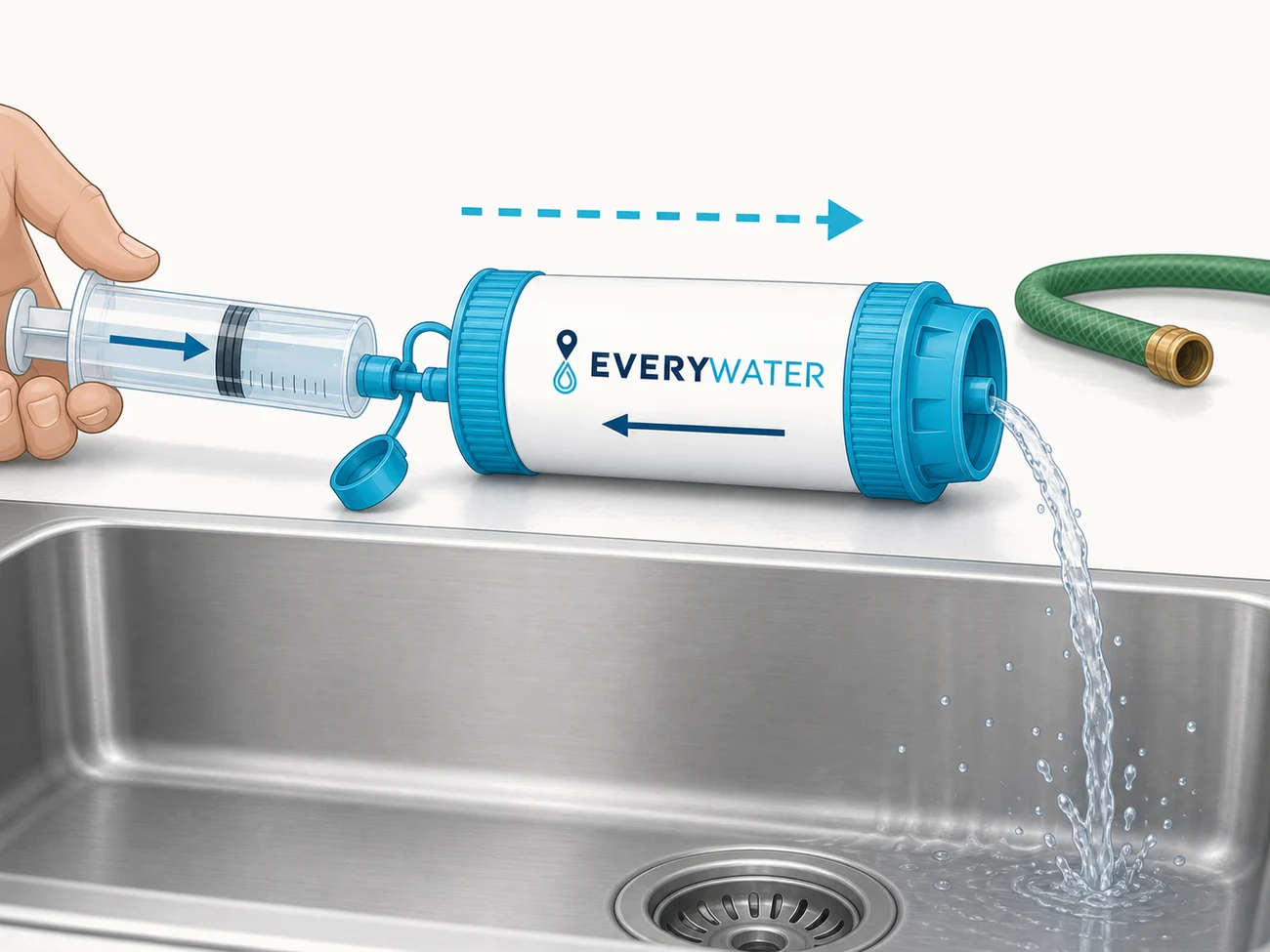
Questions people asked during setup, the steps they missed, and the workarounds they created became feedback for the next version of the product and the guidance.
The ultrafiltration membrane was designed as a barrier to bacteria and protozoa. It was not designed to remove dissolved contaminants such as arsenic, fluoride, nitrate, or salinity.
Science that begins with everyday life
I want more primary-school students in Pakistan to experience science as something they can observe, question, and test, not only as material to memorize. Water offers an immediate starting point because students already encounter it every day.
My longer-term aim is to develop low-cost learning activities in English and Urdu that teachers can use without specialized equipment. I would begin with a small set of lessons, test them with teachers and students, learn where the explanation breaks, and improve each version.
Three lesson ideas I want to develop
If you teach primary science in Pakistan and would like to help shape or test a lesson, I would be glad to hear from you.
Interactive research examples
These study pages let readers test an assumption rather than simply accept a final number.